If your equipment needs 16 L/min at 100 bar, which HPT pump should you choose—and what motor should go with it? A flow table can give you a sensible starting point. Completing the selection means checking how that pump will operate across the full range your machine needs.
Here we work through the HPT Series reference data, explain the power calculation and show what information helps us finish the selection with you.
Table of Contents
ToggleUse a flow value with its pressure and speed
The compact HPT models below are compared at the same reference point: 100 bar and 1,500 rpm. Keeping those conditions together makes the table useful.
| Model | Flow, L/min | Flow, L/h | Maximum speed, rpm |
|---|---|---|---|
| HPT 2.0 | 1.7 | 102 | 3,000 |
| HPT 3.2 | 3.6 | 216 | 3,000 |
| HPT 4.0 | 5.0 | 300 | 3,000 |
| HPT 6.3 | 8.6 | 516 | 3,000 |
| HPT 10 | 12.6 | 756 | 2,400 |
| HPT 12.5 | 16.5 | 990 | 2,400 |
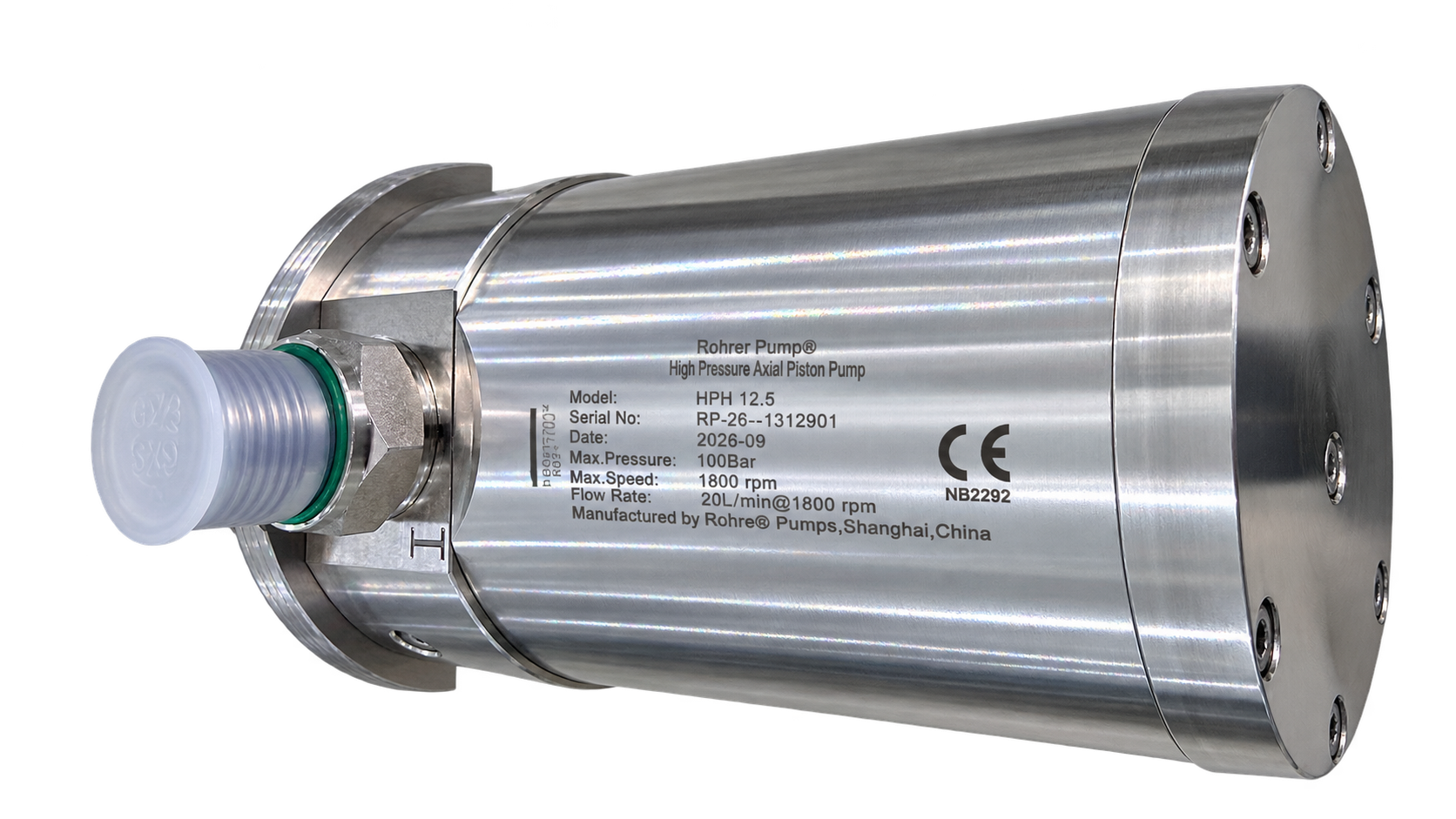
For a requirement around 16 L/min at this pressure and speed, HPT 12.5 is a candidate because its listed flow is 16.5 L/min. We would then check your acceptable flow tolerance, inlet supply and power requirement.
The speed limits are model-specific. HPT 2.0–6.3 allow up to 3,000 rpm; HPT 10 and 12.5 allow up to 2,400 rpm. These compact models list a minimum continuous speed of 1,000 rpm and an outlet-pressure range of 10–100 barg.
| Family | Outlet pressure | Speed range | Housing |
|---|---|---|---|
| HPT 20 / 25 / 32 | 30–100 barg | 1,000–2,400 rpm | SS316 |
| HPT 50 | 30–80 barg | 1,000–1,800 rpm | SS316 |
| HPT 70 / 80 / 90 | 30–100 barg | 1,000–1,800 rpm | SS316 |
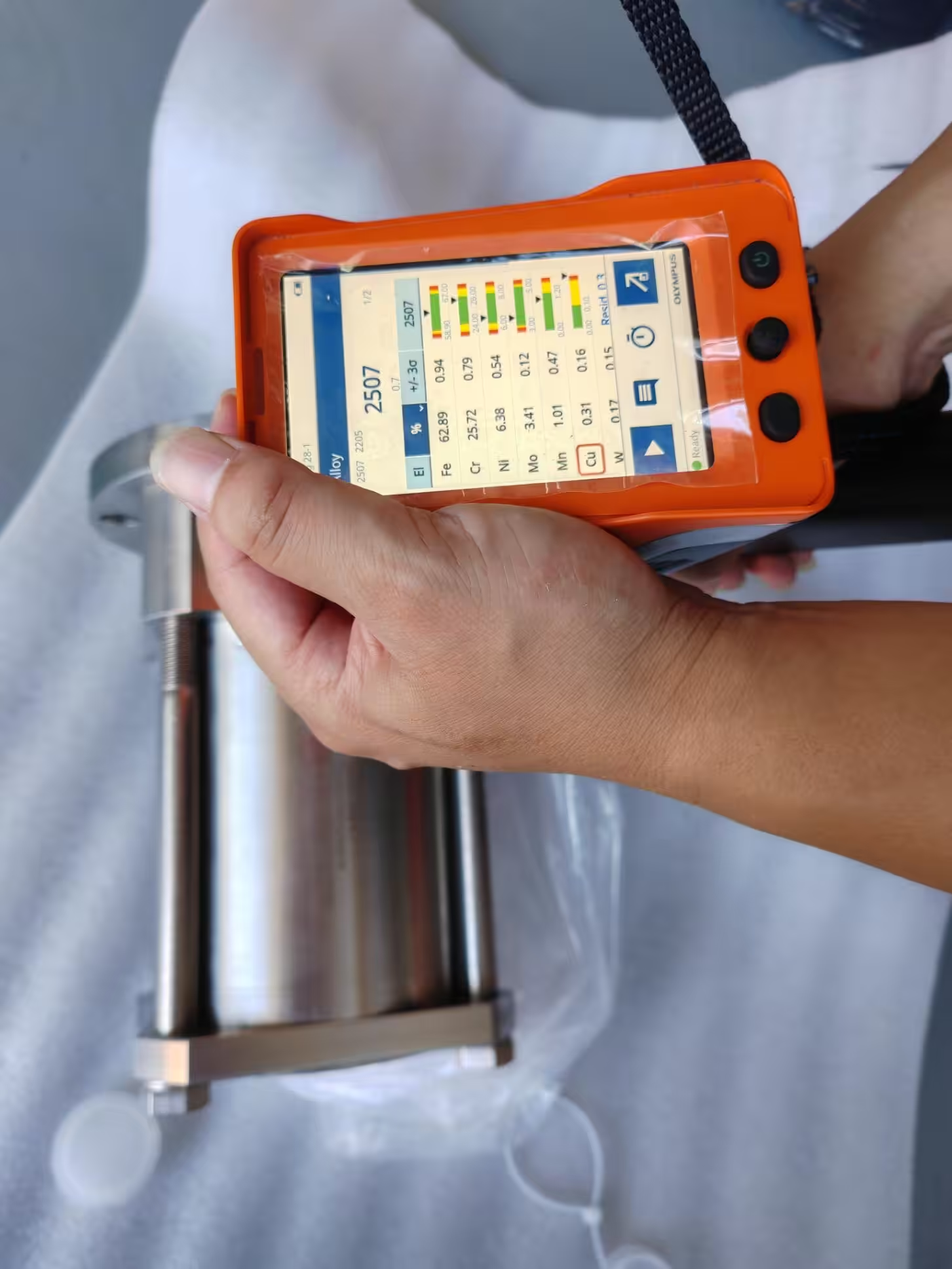
The listed water-temperature range is 2–50°C across these families. For water compatibility, the housing grade is a starting point; the complete wetted-material and seal specification needs to suit your application.
What displacement tells you—and where the flow table helps
Theoretical flow, L/min = displacement, cm³/rev × speed, rpm ÷ 1,000. For HPT 10 at 1,500 rpm, this gives 15 L/min. Its listed delivered flow at 100 bar is 12.6 L/min. The difference reflects internal leakage and the operating conditions.
Dividing 12.6 by 15 gives a volumetric-efficiency estimate of 0.84 at that point. This is useful for understanding delivered flow. It is not the total pump efficiency needed for the power calculation below.
If your duty is 7 MPa rather than 10 MPa, please ask for the corresponding performance data. A single reference point is not enough to predict output across every pressure and speed.
Work from hydraulic power to the motor requirement
There are three different power values to keep track of: power delivered to the water, power required at the pump shaft and electrical power drawn by the motor and drive.
- Hydraulic power, kW = differential pressure, bar × delivered flow, L/min ÷ 600.
- Pump shaft power, kW = hydraulic power ÷ total pump efficiency at that duty.
- Electrical input, kW = shaft power ÷ (motor efficiency × drive efficiency), where applicable.
Use discharge pressure minus inlet pressure in the first equation. Also check the label on any supplied power curve: shaft power, recommended motor rating and measured electrical input answer different questions.
| Input or result | Value |
|---|---|
| Required delivered flow | 16 L/min |
| Assumed differential pressure | 100 bar |
| Hydraulic power | 100 × 16 ÷ 600 = 2.67 kW |
| Assumed total pump efficiency | 0.80 |
| Estimated shaft power | 2.67 ÷ 0.80 = 3.33 kW |
| Assumed motor / drive efficiency | 0.90 / 0.97 |
| Estimated electrical input | 3.33 ÷ (0.90 × 0.97) = 3.82 kW |
This example shows the calculation method. The assumed efficiencies are not HPT test data, so the result is not yet a motor selection. For that, we need the actual shaft-power requirement, highest operating load, starting duty, drive current and cooling conditions over the speed range.
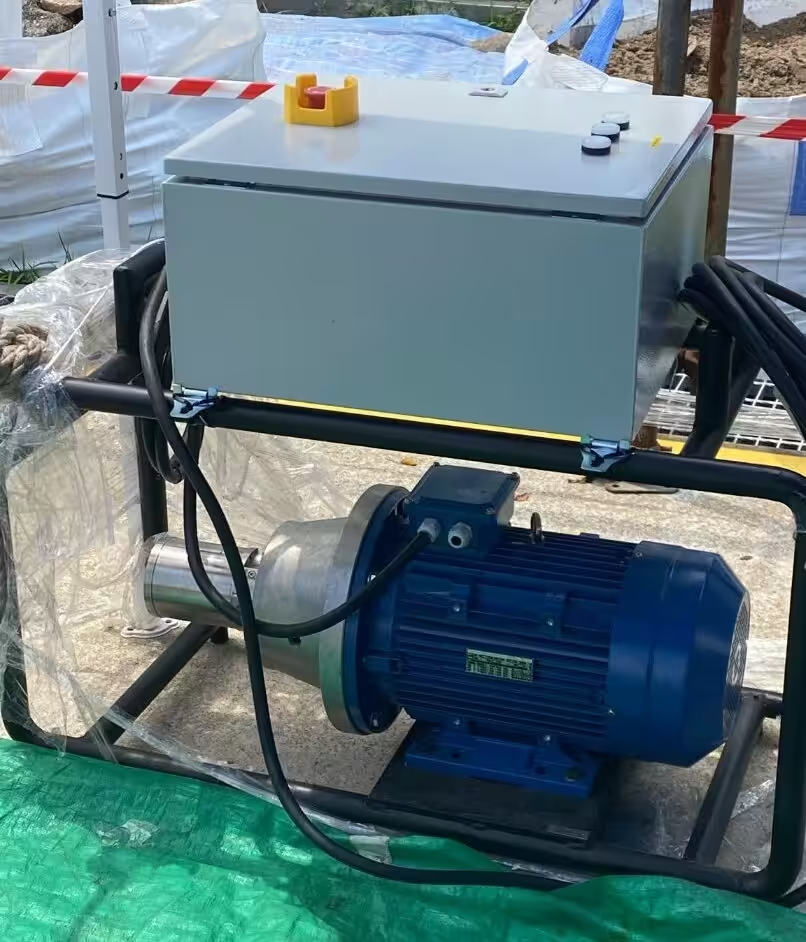
For comparison, our HPT semiconductor application specifies a 7.5 kW motor for a package with a normal requirement of 16 L/min at 10 MPa. That motor belongs to the documented project configuration; we would review your operating range before proposing the same arrangement.
Give us the operating range, including the quiet periods
The maximum pressure matters, but so do minimum flow, standby operation and frequent starts. Please include those conditions even if the pump spends most of its time at one steady duty.
| Your equipment requirement | What the selection should provide |
|---|---|
| Normal, minimum and maximum flow-pressure points | Proposed model and operating-speed range |
| Water quality, temperature and inlet pressure | Material specification and inlet review |
| Hours per day, starts per hour and control mode | Motor and drive configuration |
| Voltage, frequency and available electrical capacity | Electrical supply requirements |
| Mounting, ports and space constraints | Pump and assembly drawing |
| Performance tolerance and required tests | Agreed factory acceptance schedule |
If you are keeping an existing motor, please send its nameplate and mounting details. If you need a complete package, include the supply voltage, frequency and control requirements so we can review the pump, motor and drive together.
Let us work through the selection with you
Send your normal, minimum and maximum duty points, along with the inlet conditions. We can review the HPT model and speed range and identify the performance data needed to complete the motor selection.
Send your operating conditions · Ask Rohre about an HPT selection