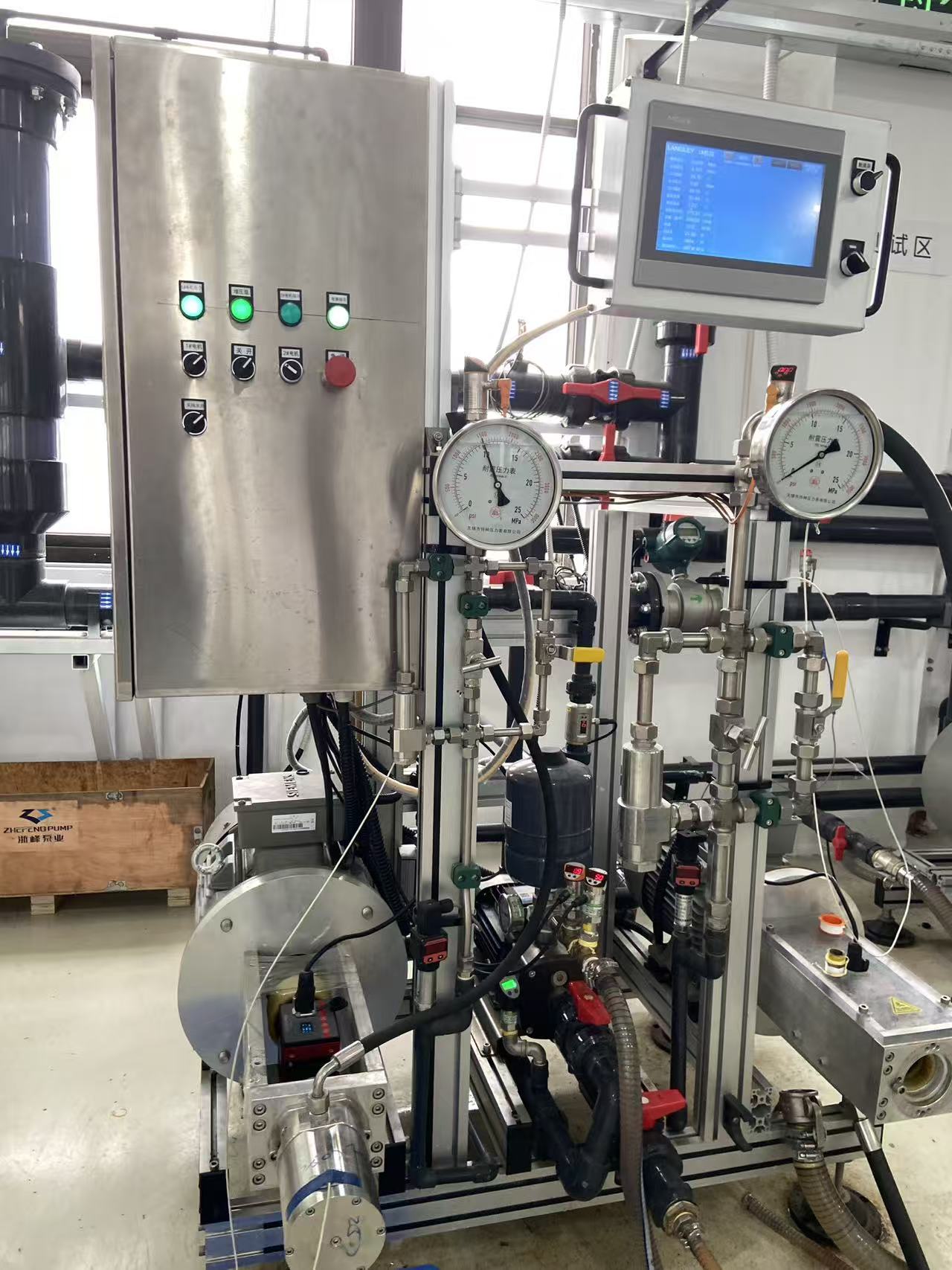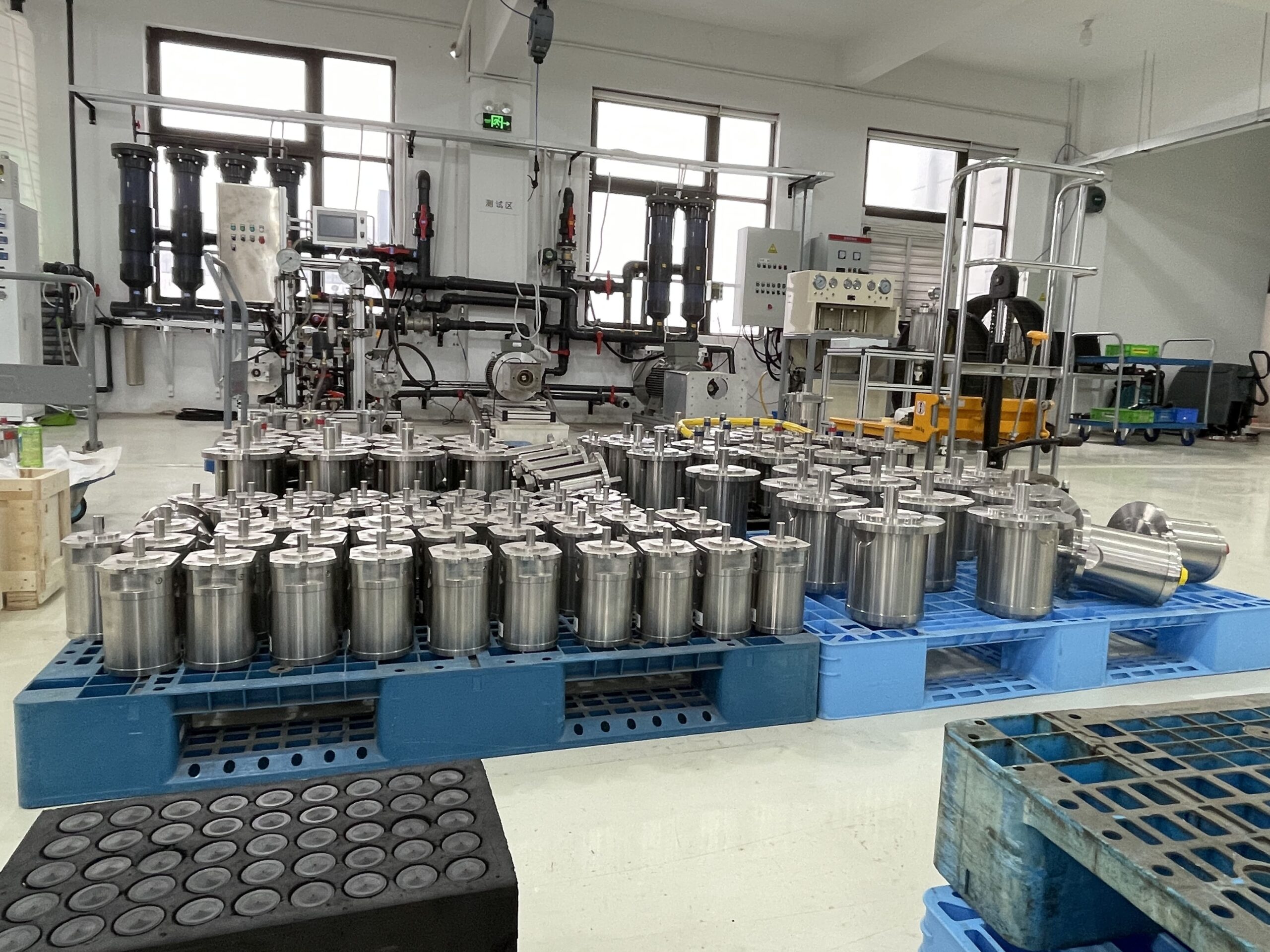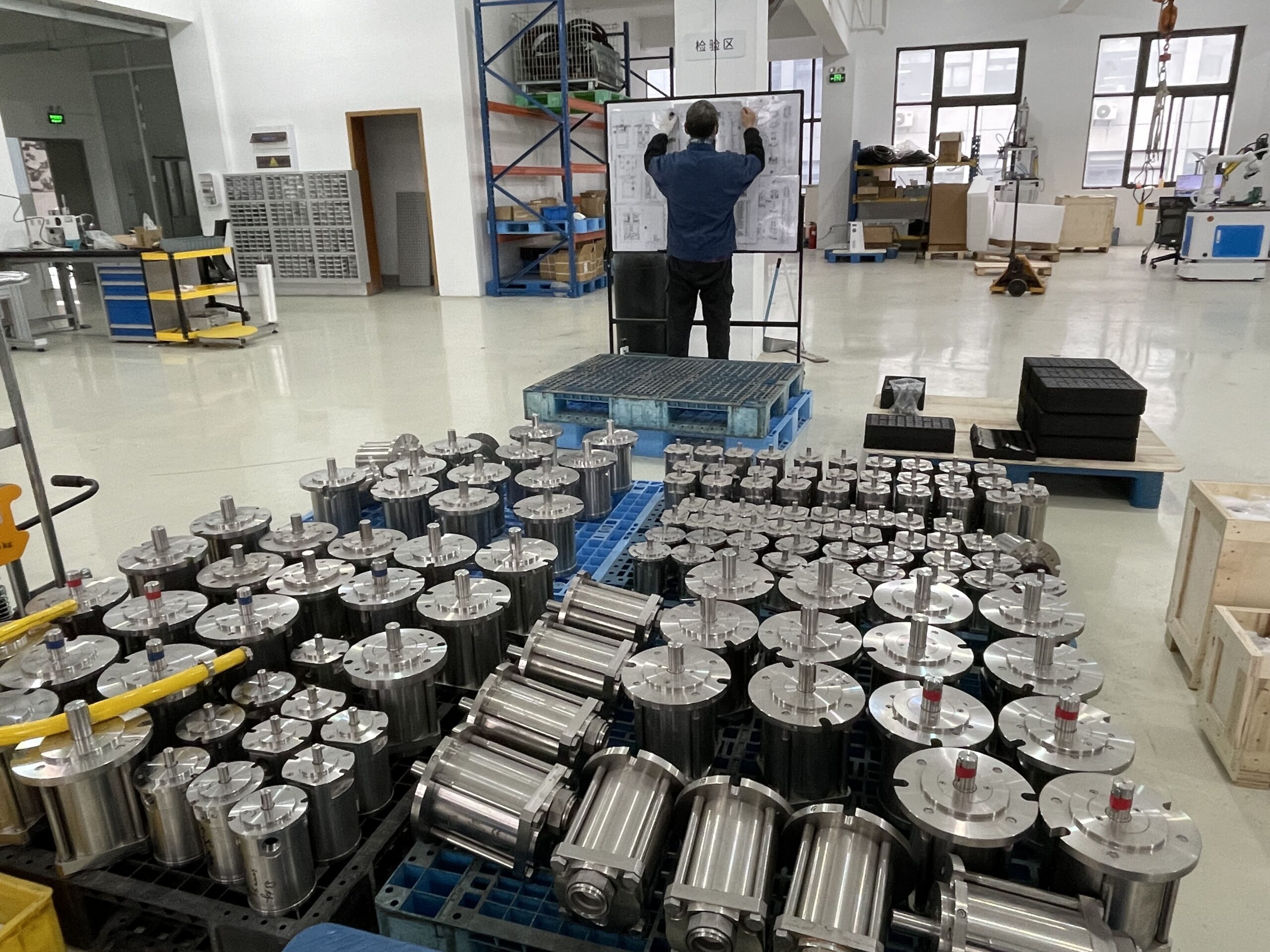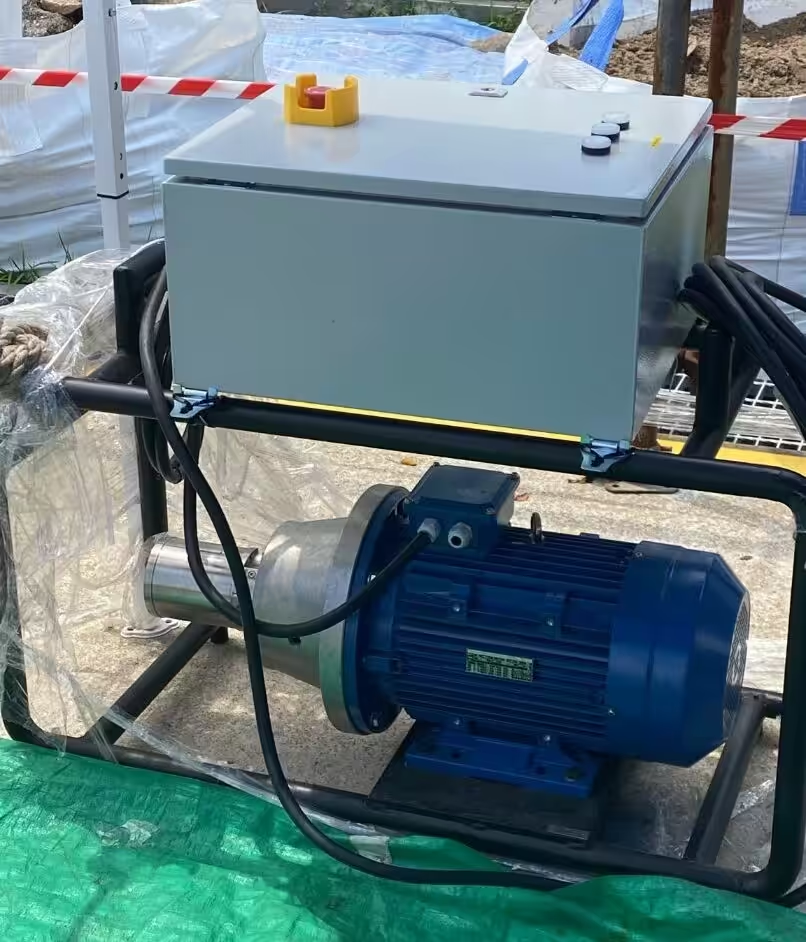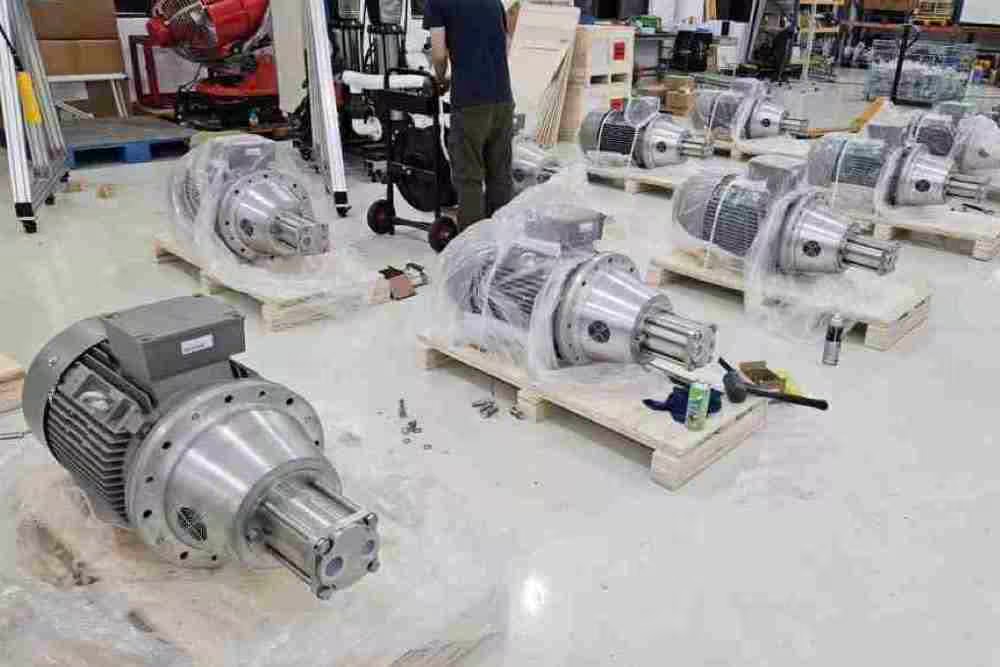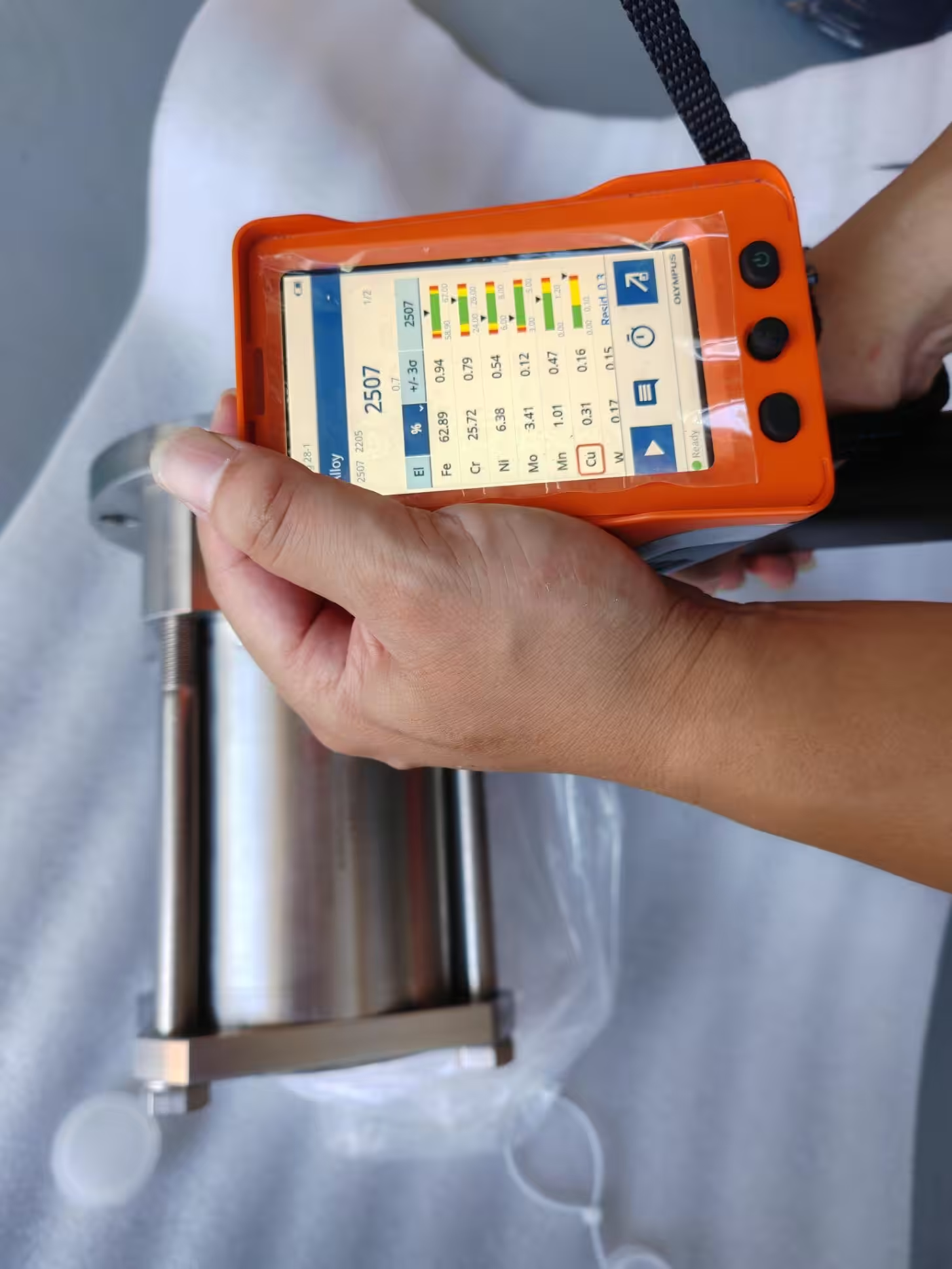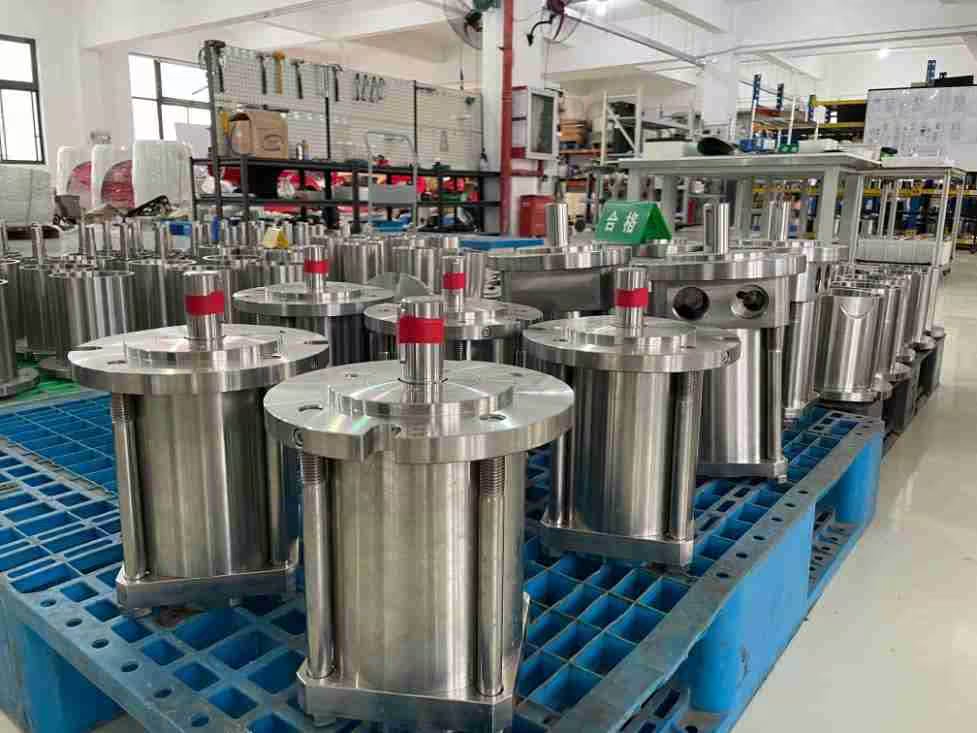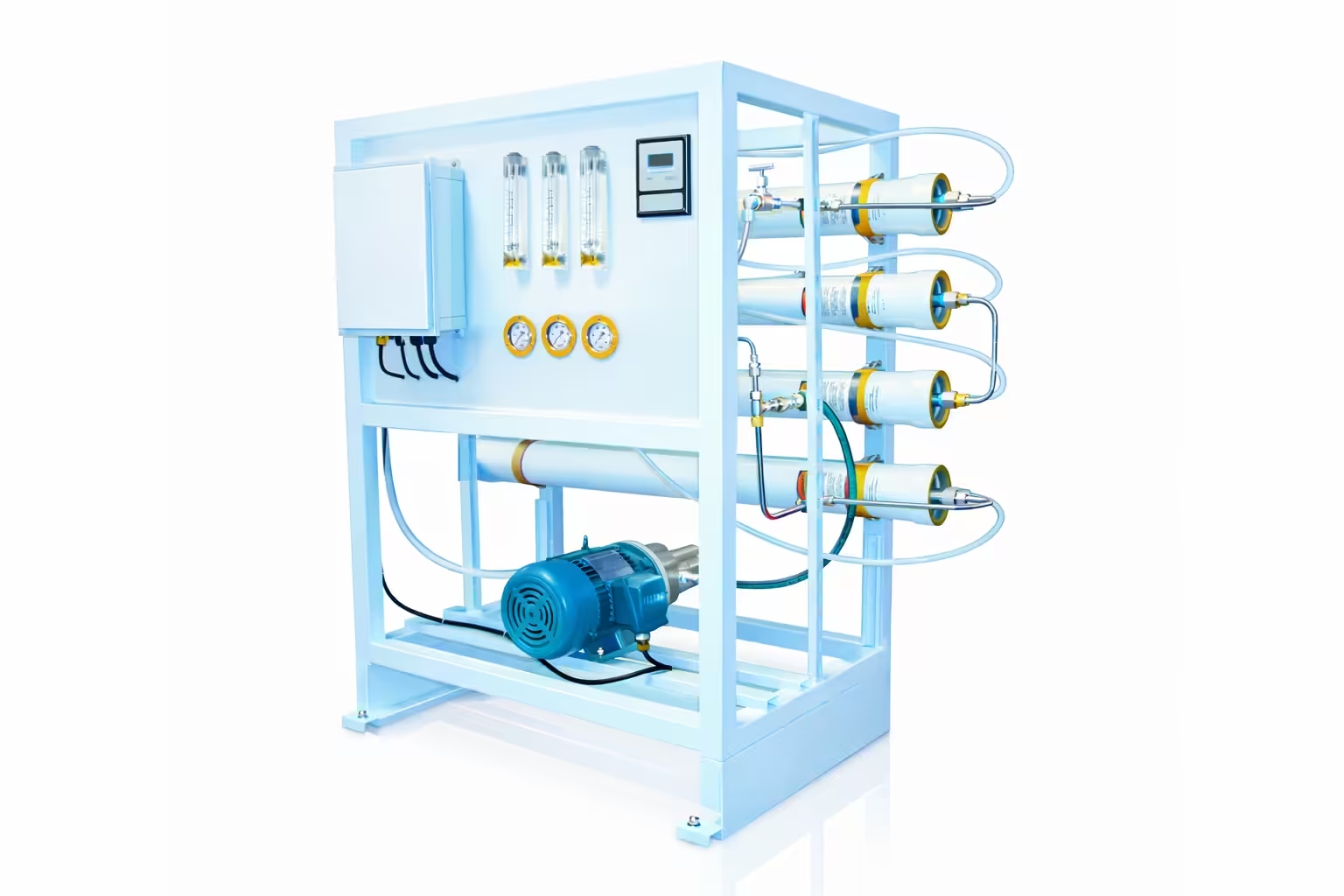
An RO high-pressure pump specification must identify the required flow, inlet and outlet pressures, speed, water conditions and material configuration at the same operating point. A series-wide maximum pressure or flow does not establish whether a particular model can meet that duty.
This guide explains how to review specifications for Rohre HPS pumps in seawater reverse osmosis (SWRO). Use the RO and SWRO pump range to identify candidate models, then check the documents for the selected model and configuration.
Define the duty before comparing pump models
Prepare a duty sheet that separates normal operation from the limiting conditions the pump must accommodate. Identify where each pressure and flow is measured. A membrane production figure alone is not a pump duty specification.
| Required information | What to specify | Decision it supports |
|---|---|---|
| Water and temperature | Water source, available analysis, temperature range and any cleaning or flushing media | Application and material review |
| Pump flow | Required flow through the pump at normal and limiting duties; identify the measurement location | Model and speed selection |
| Inlet and outlet pressures | Pressures at the pump connections, pressure reference and expected operating variations | Operating-limit and power checks |
| System arrangement | Process diagram, membrane design basis and energy recovery device arrangement, where used | Confirmation of the flow and pressure assigned to the pump branch |
| Drive and operating modes | Motor supply, proposed speed range, variable frequency drive and operating/start-stop requirements | Drive compatibility and permitted operation |
| Mechanical interfaces | Available space, shaft and coupling details, mounting, port requirements and access for service | Installation fit |
State whether a pressure is gauge or absolute. In the catalogue example below, barg means bar gauge and rpm means revolutions per minute. Keep these labels with the values when transferring data into an equipment schedule.
Read pressure, speed and flow together
The HPS catalogue lists different flow values at specified combinations of pressure and speed. The following values are reproduced from the HPS 16–21 specification table on PDF page 22 of the Rohre HPS seawater pump catalogue.
| Model | Flow at 70 barg / 1500 rpm (m³/h) | Flow at 85 barg / 1200 rpm (m³/h) | Catalogue housing material |
|---|---|---|---|
| HPS 16 | 16.00 | 12.76 | 2507 |
| HPS 17 | 16.80 | 13.45 | 2507 |
| HPS 19 | 18.85 | 15.02 | 2507 |
| HPS 21 | 21.82 | 17.52 | 2507 |
These are catalogue reference points for the named models, not a universal operating range for every Rohre pump. The catalogue lists maximum outlet pressure for this group as 70 barg at 1500 rpm and 85 barg at 1200 rpm. It does not establish approval to combine 85 barg with 1500 rpm.
Example: checking an HPS 16 duty
For HPS 16, the catalogue lists 16.00 m³/h at 70 barg and 1500 rpm. At 85 barg and 1200 rpm, the listed flow is 12.76 m³/h. A requirement for 16.00 m³/h at 85 barg therefore cannot be accepted by combining values from those two rows. Request a supported model selection or a revised system duty.
For a duty between published points, request the applicable curve and confirmation of the permitted pressure-speed combination. Do not assume that a speed increase is allowed simply because the motor or variable frequency drive can provide it. The HPS 16–21 product page provides the corresponding product entry.
Confirm inlet conditions and filtration for the selected model
Specify inlet conditions at the pump connection under flowing conditions, including the effect of the inlet filter and supply piping. A supply pressure measured elsewhere in the system does not by itself establish the pressure available at the pump.
Request the inlet requirements, filtration specification and start-up procedure that apply to the selected model and document revision. For filtration, obtain both the particle-size requirement and the rating or test basis; a micron value without its definition is incomplete.
The Rohre installation, operation and maintenance resource is a starting point for that review. Where a general instruction and a model-specific document differ, obtain written clarification before setting operating limits. This article does not prescribe a common inlet-pressure or filtration setting for the full range.
Separate housing material from the complete wetted configuration
The example table identifies the housing material only. It does not establish the materials of every piston, seal, bearing or other wetted component. Request the material schedule for the proposed configuration when the application requires component-level review. The pump material selection guide shows how to separate a housing grade from the complete wetted-material decision.
For seawater service, provide the water analysis, temperature and exposure conditions needed for that review, including relevant shutdown and cleaning conditions. A housing grade alone is insufficient evidence for accepting the complete pump in a particular service.
Keep seawater selection separate from high-purity water qualification. An oil-free design description or a seawater catalogue does not demonstrate a specified contamination performance in deionized or ultrapure water. That requires evidence relevant to the proposed configuration and the customer’s acceptance criteria.
Check motor loading and installation interfaces
Ask for the power requirement at the actual flow, pressure difference and speed. Distinguish hydraulic power, pump shaft power and motor electrical input. Record the efficiency basis used in any calculation, and have the proposed motor checked for the supply, drive and site conditions.
A catalogue motor-selection entry should not be treated as a universal motor rating for every duty. Similarly, a pump with a suitable hydraulic duty is not automatically a mechanical replacement for another pump. Check the shaft, coupling, bell housing, mounting and port drawings against the installed equipment.
Use the RO engineering resource center to identify available drawings and calculation resources. Check each tool’s assumptions and units before using its result in a selection record; the result must remain traceable to the proposed model and duty.
What the technical offer should confirm
- The proposed pump model, configuration and supporting document revisions.
- Flow, outlet pressure and speed at each required duty, with the applicable inlet conditions.
- Materials and seals relevant to the specified water and cleaning conditions.
- The motor and drive selection basis, plus installation interface drawings.
- Applicable installation and maintenance documents, together with any unresolved requirements.
Keep unresolved items visible. Avoid combining independent maxima, copying a generic inlet range, treating a housing grade as a complete material specification, or accepting a replacement based only on a similar model name or displacement.
Send the operating data for a model-specific review
Send Rohre your pump duty sheet with the water analysis, required pump flow, inlet and outlet pressures, temperature range, proposed drive and system diagram. For replacement work, include the existing pump identification and interface drawings. Ask for confirmation of the supported duty and any remaining technical conditions before finalizing the selection.