Select an SWRO high-pressure pump from the flow that actually passes through the pump branch, the required pressure rise at that flow, and the inlet condition available at the pump connection. Plant production capacity and membrane feed flow are useful process figures, but neither is automatically the pump flow when an energy recovery device is part of the system.
Rohre uses that branch-level duty to select a High-Pressure Seawater Pump (HPS Series), then checks speed, motor loading, inlet conditions, materials, interfaces and supply scope as one configuration. This prevents a pump from looking correct in a model list while being wrong for the actual pipework.
Start with the pump branch, not the plant output
An enquiry that says only “500 m³/day SWRO plant” does not define a pump. The same permeate output can be produced with different recovery ratios, membrane arrangements, ERD types, numbers of trains and operating pressures. Those choices change the flow assigned to the high-pressure pump.
The controlled input for pump selection is the P&ID or hydraulic diagram at the required operating condition. It should show where the pump draws water, where it discharges, how the ERD connects and where each pressure and flow value is measured.
| System information | Value used for pump selection | Why it matters |
|---|---|---|
| Permeate production | Reference only until recovery, concentrate flow and train arrangement are defined | Production is not automatically pump flow |
| ERD arrangement | Actual flow through the high-pressure pump branch at each operating mode | An isobaric ERD or another arrangement can divide the hydraulic duty between branches |
| Inlet pressure | Pressure available at the pump connection while the required flow is passing | Upstream pipe and filter losses reduce the pressure seen by the pump |
| Outlet pressure | Pressure required at the pump connection, with gauge or absolute basis stated | The pump must meet the pressure rise at the same flow and speed |
| Operating cases | Normal, minimum, maximum, start-up, flushing and any reduced-output duty | A single design point can hide an inlet or speed problem in another mode |
For containerized plants, the same principle applies. The containerized SWRO pump guide covers space, controls and ERD integration in more detail. For the pump model itself, we work from the branch flow and pressure rather than applying a generic pump-flow factor to daily water production.
Read flow, pressure and speed as one operating point
A positive-displacement axial piston pump has a close relationship between rotational speed and flow, but that does not make every speed-pressure combination permissible. A series maximum, a flow from one catalogue row and a pressure from another row cannot be combined into a new duty.
The following published points come from page 22 of the current Rohre HPS seawater pump catalogue. They illustrate how the candidate model changes when the required pressure and permitted speed change.
| Model | Flow at 70 barg / 1500 rpm | Flow at 85 barg / 1200 rpm | Catalogue housing material |
|---|---|---|---|
| HPS 16 | 16.00 m³/h | 12.76 m³/h | 2507 |
| HPS 17 | 16.80 m³/h | 13.45 m³/h | 2507 |
| HPS 19 | 18.85 m³/h | 15.02 m³/h | 2507 |
| HPS 21 | 21.82 m³/h | 17.52 m³/h | 2507 |
The table does not say that HPS 16 can provide 16.00 m³/h at 85 barg. It provides 16.00 m³/h at 70 barg and 1500 rpm, and 12.76 m³/h at 85 barg and 1200 rpm. A requirement for 16.00 m³/h at 85 barg therefore needs a different supported selection or a revised system duty. The detailed RO high-pressure pump specification guide explains how to keep those catalogue conditions together.
For a duty between published points, Rohre checks the applicable curve and permitted operating combination. We also review the expected speed range instead of treating the VFD as permission to run at any frequency the motor can accept.
Inlet conditions can change the selection
A hydraulically suitable model still needs the correct water supply at its inlet. We use pressure measured or calculated at the pump connection while the required flow is passing. A booster-pump discharge pressure measured upstream of a long pipe, strainer or cartridge filter is not the same value.
The inlet review includes:
- minimum, normal and maximum inlet pressure at the pump connection;
- the pressure basis and the location of the measurement;
- water temperature and the full expected operating range;
- pressure loss through piping, valves and the filter at clean and loaded conditions;
- filter particle rating and its test basis, not only an isolated micron number;
- seawater analysis, suspended solids and any cleaning or flushing media;
- start-up, shutdown and flushing sequences that change flow or pressure.
Rohre confirms the inlet and filtration requirement for the selected model and document revision. We do not apply one generic inlet-pressure or filtration value to the whole HPS range. The installation, operation and maintenance resource supports the installation review, while the final project documents define the selected pump.
Choose the complete configuration, not only the bare pump
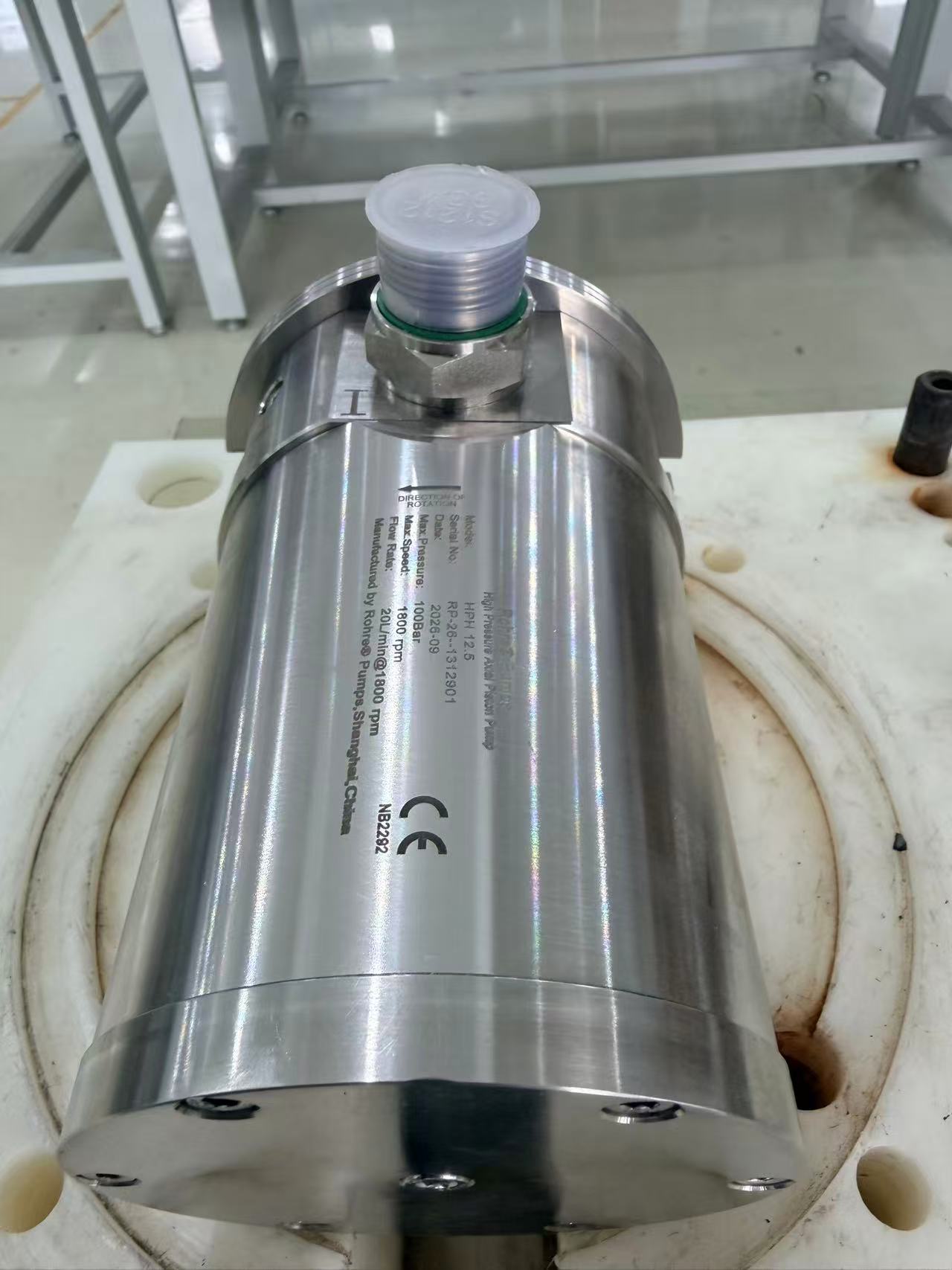
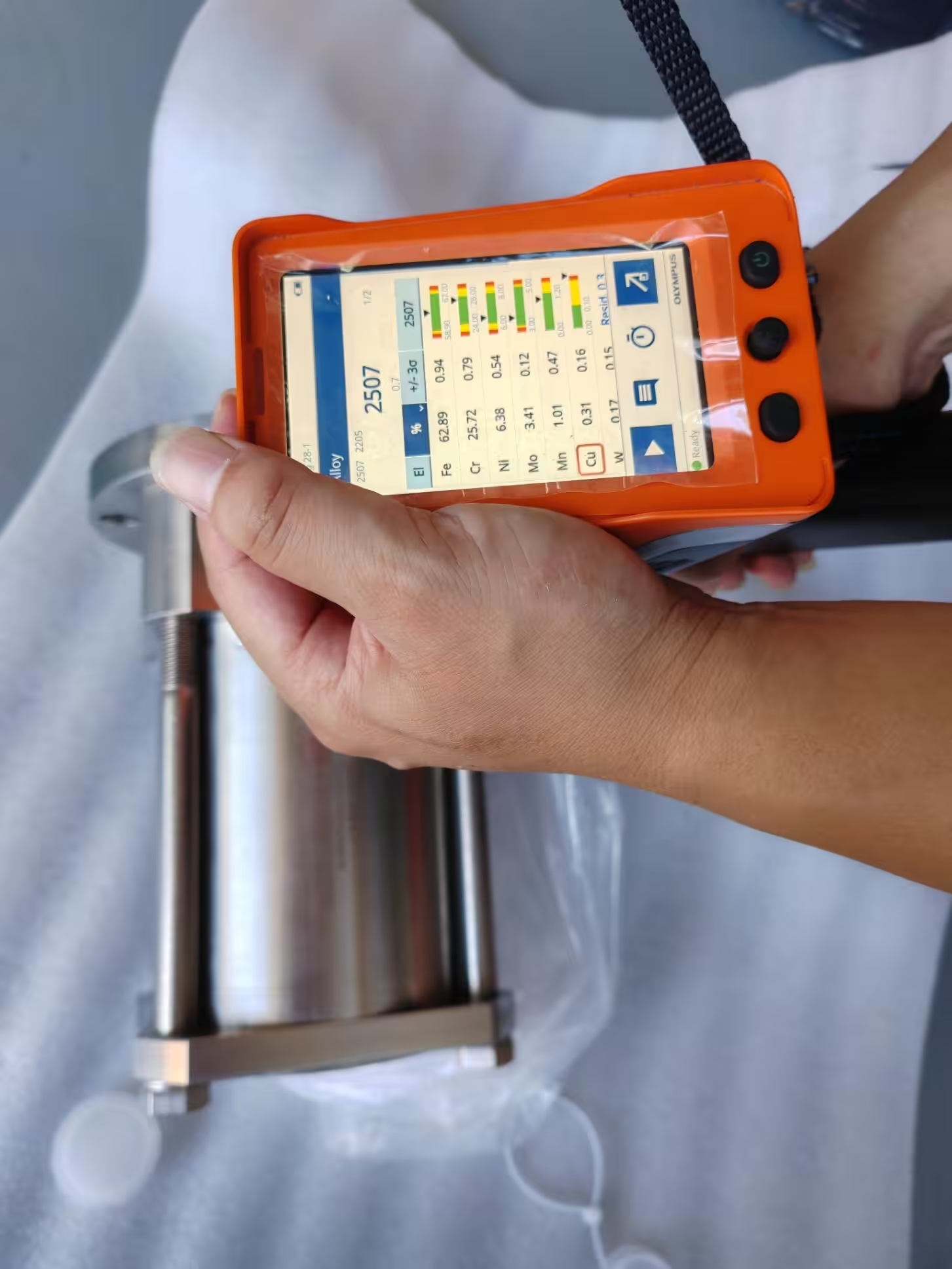
Once the hydraulic duty is established, the configuration must fit the water, drive and skid. Rohre’s current seawater pump housing is 2507 super duplex stainless steel. The housing grade does not describe every internal or wetted component, so applications requiring a full material review are checked against the proposed pump configuration and the customer’s water analysis. The high-pressure pump material guide explains the difference between a housing material and a complete wetted-material schedule.
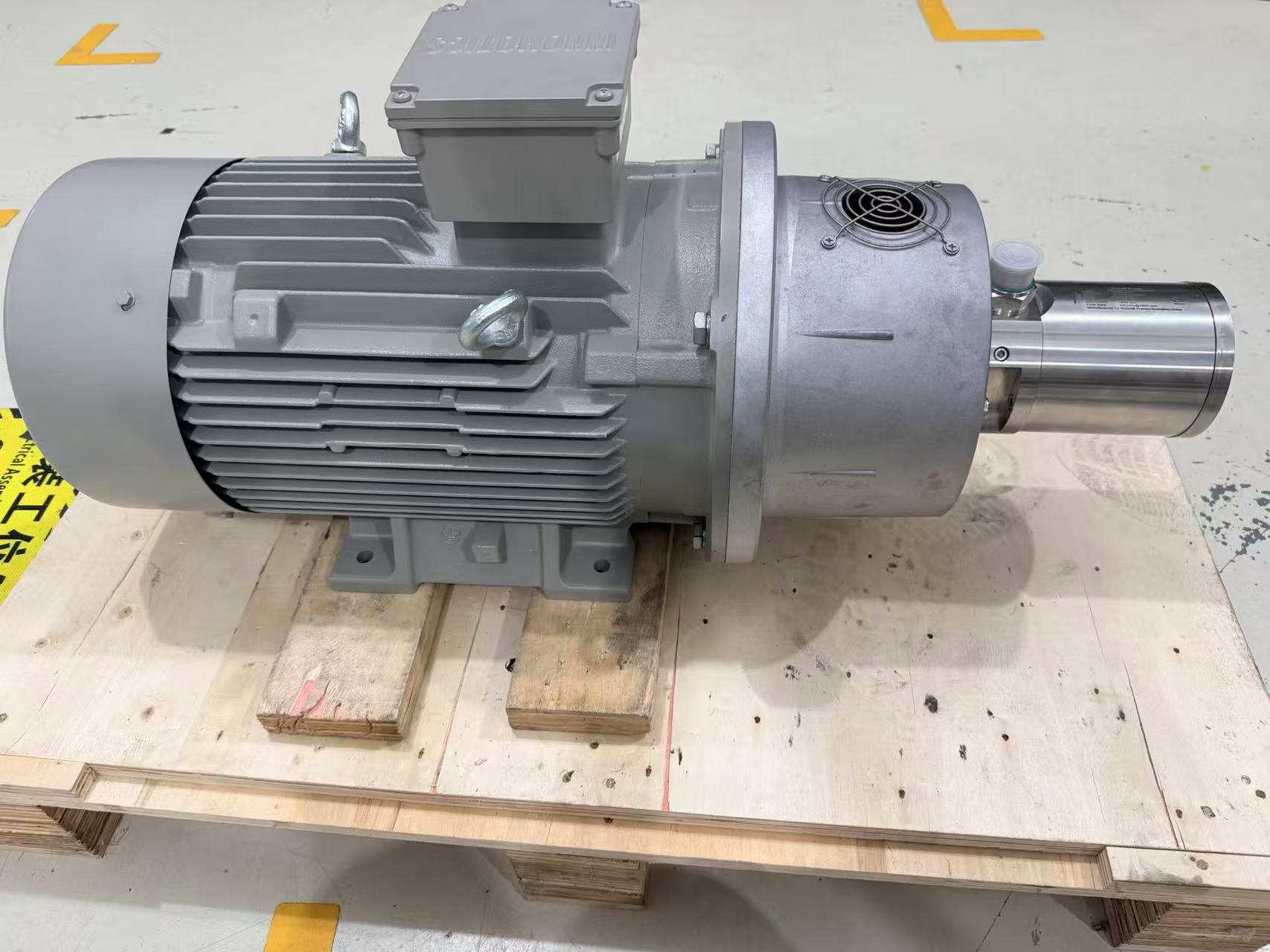
The drive review covers motor supply, continuous and temporary operating speeds, VFD control, starts and stops, ambient conditions and motor loading at the proposed duty. If the customer supplies the motor, Rohre checks the pump operating parameters, motor specification and mechanical connection. We can supply the matching coupling and bell housing when required.
Mechanical integration also includes shaft and mounting arrangement, inlet and outlet connections, hose or piping loads, available installation space and maintenance access. The final connection dimensions come from the selected model drawing; they are not inferred from a similar displacement or another manufacturer’s model. Where flexible connections are used, the RO high-pressure hose and connector guide gives the project inputs needed for the assembly.
| Decision | Rohre review | Output |
|---|---|---|
| Pump model | Branch flow, pressure, speed and operating cases | Supported HPS model and duty points |
| Inlet arrangement | Available pressure, pipe and filter losses, temperature and sequence | Confirmed inlet and filtration conditions |
| Materials | Water analysis, temperature, cleaning and required component scope | Material schedule for the proposed configuration |
| Motor and control | Power supply, VFD, speed range, duty cycle and loading | Motor/drive basis or compatibility check for the customer’s motor |
| Mechanical interfaces | Mounting, shaft, coupling, bell housing, ports and available space | Interface drawing and agreed supply boundary |
| Service plan | Duty/standby arrangement, access, spares and operating environment | Maintenance and spare-parts scope for the project |
Keep commercial value in the engineering decision
For SWRO projects, selection is not complete when the pump reaches one hydraulic point. The customer also needs a configuration that can be delivered, installed and supported within the project plan.
Energy commonly represents 60–70% of pump lifecycle cost over a 15- to 20-year period, while initial equipment purchase can be below 15%. A higher-efficiency pump with a 20% purchase-price premium can therefore recover that difference within about three years in a suitable duty. The comparison must use the same flow, pressure, annual operating hours, electricity price and efficiency boundary for each option.
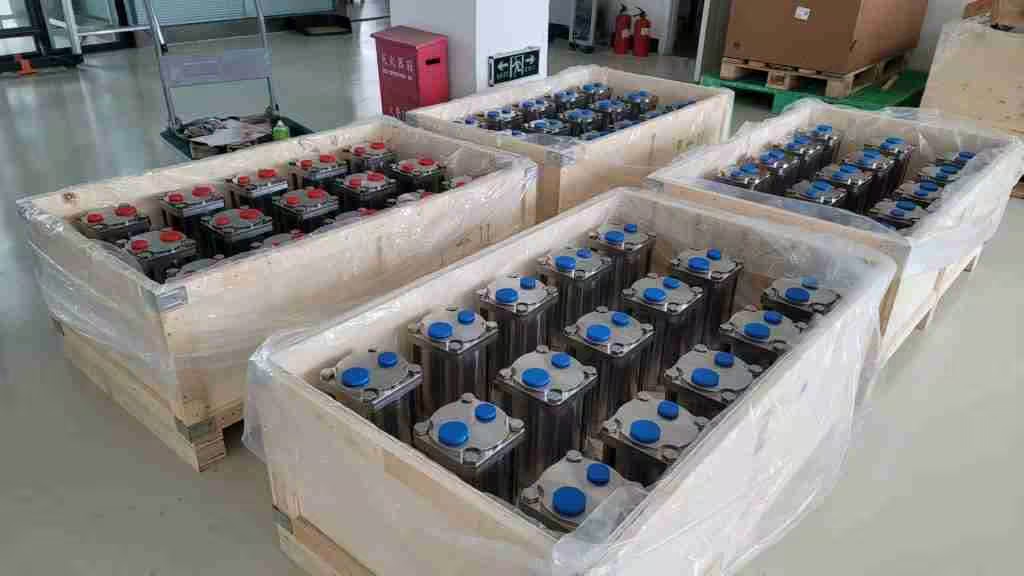
For standard small and mid-sized SWRO models, Rohre has supported stock availability or assembly and shipment within 2 to 6 weeks. The quoted lead time for a project starts once the order is placed, the drawings are approved and the deposit payment has been received. If an earlier delivery is required, we can discuss expedited production and agree a revised schedule.
High-quality axial piston pumps are designed around long service life, with MTBF figures above 20,000 hours used in this class of equipment. Under stable seawater supply and pretreatment conditions, field operation of two to three years without internal inspection or component replacement has been achieved. Routine maintenance checks are commonly planned at six- to 12-month intervals, and some installations have operated for more than 18 months without parts replacement. The actual plan remains tied to the selected model, water condition, operating hours and service history.
An anonymous SWRO OEM case: selection affected more than pump price
A Singapore-based OEM evaluated Rohre for a 20-foot containerized SWRO unit producing 38 m³/day. The recorded system duty included 800–900 psi working pressure, 26% recovery, feedwater TDS up to 45,000 ppm, product-water TDS up to 500 ppm and a total packaged weight of approximately 3,750 kg. The system used a Rohre axial piston high-pressure seawater pump with a VFD-compatible 20 HP motor.
The OEM had been using an international axial piston pump brand. As annual demand approached 300 pumps, purchase cost and lead time became important constraints. Rohre supplied a trial batch and completed the agreed inspections and performance tests. After validation, Rohre became an approved pump source for the OEM.
The customer recorded more than 40% reduction in annual pump procurement cost, shorter lead times and no serious failures during full-load continuous operation. This case does not replace model selection: it shows why the selected duty, repeatable interfaces, testing, spare-parts plan and supply capacity need to be considered together.
What to send for a model and quotation
The fastest route to a usable selection is one controlled duty package rather than a series name alone. Send the P&ID, normal and limiting pump-branch flow, inlet and outlet pressures with measurement locations and pressure basis, water analysis and temperature range, ERD arrangement, motor/VFD information, interface drawings and required supply boundary.
For a replacement, include the existing pump nameplate, shaft and mounting details, port drawings, motor data and the operating point actually required. Similar displacement does not by itself establish a direct replacement.
Submit the high-pressure pump selection form or send the duty package to Rohre. We will return a model-specific selection, proposed configuration and the remaining project conditions needed for quotation.